Anisomelia · LLD
Leg Length Discrepancy Correction in Turkey
 Op. Dr. Serdar Karaman, Orthopedics & Traumatology
Live Taller Now, Istanbul · Last updated July 2026
In short: a leg length discrepancy (LLD) under about 2 cm is usually managed with a shoe lift; beyond 2 cm, the tilt distorts gait and loads the spine, hip and knee, and lengthening the shorter leg is the durable fix. We correct 2-8 cm differences using the same LON and Precice 2 techniques as cosmetic lengthening, and unlike cosmetic cases, documented LLD is sometimes partly covered by insurance.
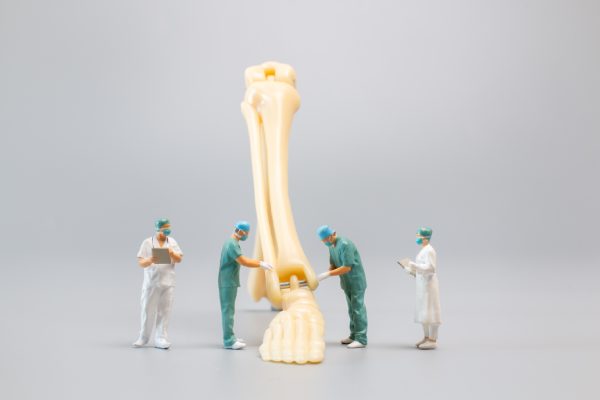
What is leg length discrepancy?
Leg length discrepancy (LLD), sometimes called anisomelia, simply means one leg is shorter than the other. It exists on a spectrum. Tiny differences of a few millimeters are so common they are considered normal variation, and most people who have them never know. Larger differences, however, force the body to compensate: the pelvis tilts, the spine curves to keep your eyes level, and your gait develops a subtle limp. Over years, that asymmetry concentrates stress on the hip, knee and lower back of one side, which is why a significant discrepancy is not just a cosmetic matter but a genuine source of chronic pain.
The crucial distinction is between a true (structural) discrepancy, where the bones themselves are different lengths, and a functional (apparent) discrepancy, where the bones are equal but pelvic tilt, muscle tightness or scoliosis makes the legs appear unequal. The two are treated completely differently, so the first job is always to measure correctly.
How much leg length discrepancy is normal?
As a practical guide used in orthopedic practice: differences under ~1 cm rarely need any treatment and are within normal variation. Differences of 1-2 cm are typically managed conservatively with a heel lift or insole if, and only if, they cause symptoms. Once a discrepancy exceeds 2 cm, the biomechanical effects on gait, hips and spine become significant enough that lengthening the shorter leg is worth serious consideration, particularly in a younger, active person who will carry the asymmetry for decades.
How to measure leg length discrepancy at home
You can screen for a discrepancy at home, though only imaging confirms it. Two simple methods:
- Tape measure: lie flat on your back with legs straight. Have someone measure from the bony bump at the front of each hip (the anterior superior iliac spine) to the inner ankle bone, and compare the two sides.
- Book test: stand with bare feet and slide thin books or boards under the shorter leg until your hips feel level and your pelvis is even. The height of the stack estimates the gap.
Treat these as screening only. A precise, reliable measurement requires standing long-leg X-rays (a scanogram or EOS image), because pelvic tilt, hip contractures and scoliosis can all mimic or mask a true difference. We confirm the real number before recommending anything, and if the honest answer is "an insole will do," we will say so.

Why is one leg shorter than the other?
- Fracture malunion, a femur or tibia that healed shortened after a break
- Growth-plate injury or infection in childhood that slowed one side's growth
- Congenital difference present from birth (e.g. hemihypertrophy or hypoplasia)
- Hip or knee replacement that left a small residual difference
- Scoliosis or pelvic tilt creating a functional, not structural, discrepancy
Can leg length discrepancy correct itself?
In a child who is still growing, some discrepancies do even out over time, and surgeons can sometimes use growth-modulation techniques to encourage that. In an adult, however, a true bony discrepancy will not resolve on its own, the growth plates have closed and the bones will not change length without intervention. The exception is a functional discrepancy driven by muscle tightness or pelvic alignment, which targeted physiotherapy can genuinely improve. This is precisely why distinguishing structural from functional causes on X-ray comes first: it determines whether the answer is exercises, an insole, or lengthening.
Treatment options, from conservative to surgical
Correction is matched to the size and cause of the discrepancy:
- Under 2 cm, asymptomatic: often nothing, or a simple heel lift/insole.
- Functional difference: physiotherapy addressing pelvic tilt and muscle imbalance.
- Over 2 cm, or symptomatic and structural: surgery for a permanent, symmetrical result, usually lengthening the shorter leg, or shortening the longer one when the difference is small enough.
Surgical correction uses identical biology to cosmetic stature lengthening, applied to just one leg. After an osteotomy, the shorter bone is lengthened at 1 mm/day with a LON nail-and-frame or a fully internal Precice 2 nail, until standing long-leg X-rays confirm the legs are equal. Because only one limb is operated, hospital time, recovery and cost are all lower than a bilateral cosmetic case. And unlike purely cosmetic lengthening, a documented discrepancy is sometimes partly reimbursable by insurers, we provide the medical report and imaging your insurer needs to assess a claim.
Your journey with Live Taller Now, step by step
Travelling abroad for leg length discrepancy correction works best when every stage is mapped before you board a plane. Our international-patient pathway is deliberately transparent:
- Day 0
Free remote assessment
You send your X-rays and a short health history. The surgeon confirms whether you are a candidate, what is safely achievable, and which method suits your anatomy, then you receive a fixed, written, all-inclusive quote with nothing hidden.
- Before travel
Planning & scheduling
We agree your dates, explain exactly what to bring, and prepare your pre-operative checklist. Your coordinator is reachable on WhatsApp throughout, in English.
- Arrival week
Surgery & hospital care
Airport VIP pickup, pre-operative tests and clearance, then surgery. You recover in a private hospital room with pain management and your first physiotherapy before moving to serviced accommodation.
- In Istanbul
Supervised recovery
Daily physiotherapy, scheduled X-rays and 24/7 support through the phase that matters most. Nothing about your recovery is left to chance or done unsupervised.
- Back home
Remote follow-up
You fly home with a written aftercare protocol any local orthopedist can follow, and continue scheduled X-ray reviews with the surgeon who treated you.
The long-term cost of an untreated discrepancy
It is tempting to live with a moderate discrepancy, and for small differences that is entirely reasonable. But a significant, untreated difference is not biomechanically neutral. To keep your eyes level and your body balanced, the pelvis tilts and the spine curves, a compensation that, sustained over decades, concentrates stress on the hip, knee and lower back of one side. Many people who present in their thirties and forties with one-sided hip or back pain are, in fact, dealing with the downstream effects of a leg-length difference they never had measured. This is why correction in a younger, active person is as much about protecting joints for the future as it is about symmetry today: equalizing the legs removes the daily asymmetry that quietly wears one side of the body.
Children versus adults: why timing changes everything
The right treatment for a discrepancy depends heavily on skeletal maturity. In a growing child, surgeons have options that harness remaining growth, including guided-growth procedures that gently slow the longer leg so the shorter one catches up, and some mild discrepancies even even out naturally. Once the growth plates close, those options disappear: an adult's bones will not change length on their own, so a true structural difference is corrected surgically: by lengthening the shorter leg or, when the difference is small enough, by shortening the longer one. Our guide to shortening vs lengthening compares the two. Understanding which situation applies is the whole reason imaging comes first. For adults, single-leg lengthening is a well-defined, durable solution, and because only one limb is operated, recovery and cost are lower than a bilateral cosmetic case.
Why patients choose Live Taller Now in Istanbul
Turkey has become the world's highest-volume destination for limb lengthening and deformity correction, and Istanbul sits at its centre. The advantage is not simply price, though all-inclusive packages here run a fraction of US and UK costs, it is the combination of an licensed private hospital, a surgeon who performs these operations as a core part of his practice, dedicated in-house physiotherapy, and coordinators who manage the entire journey in English. Just as importantly, we practise honest candidacy: if your X-rays or health profile make you a poor candidate, or your goal exceeds safe limits, you will be told so plainly, with the reasons. Every figure on this page, the gain limits, the 1 mm/day rate, the recovery windows, reflects real orthopedic practice rather than marketing, and every quote is fixed in writing before you commit. You can read more about your surgeon on the Our Doctor page.
Risks of discrepancy correction, and how they are minimized
Single-leg lengthening carries the same category of risks as any lengthening, pin-site infection with frame methods, joint stiffness, temporary nerve irritation, delayed consolidation, blood clots and, rarely, deep infection, but the overall burden is generally lower than a bilateral cosmetic case because only one limb is involved. The safeguards are identical: precise planning from standing X-rays, the conservative 1 mm/day rate, weekly imaging, anticoagulation, and daily physiotherapy, with a strict no-smoking requirement to protect healing. A discrepancy-specific point is accuracy of the end result: the goal is equal legs, so the surgeon monitors length against the opposite side throughout and stops at parity, confirmed on X-ray, rather than overshooting.
Shoe lifts versus surgery: making the choice
For discrepancies that do warrant action but sit near the threshold, patients reasonably ask whether a lift is "good enough." A well-made shoe lift or orthotic insole is genuinely effective for smaller differences: it levels the pelvis during walking, eases the compensatory strain on the back and hips, and costs very little. Its limits are practical, larger lifts become bulky and destabilizing, they only work while you are wearing that footwear, and they manage the consequences of the difference without changing it. Surgical lengthening, by contrast, is a one-time correction that equalizes the legs permanently and works barefoot, in any shoe, for the rest of your life. For a small or borderline difference, a lift is often the sensible first step. For a larger difference in an active person with decades ahead, permanent correction usually proves the better investment. The honest recommendation depends on your exact number, your symptoms and your age, which is precisely what the free X-ray review establishes.
Frequently asked questions
How much leg length discrepancy is normal?
Small differences are extremely common, many people have a few millimeters and never notice. Under about 1 cm rarely needs treatment; 1-2 cm is usually managed with a shoe lift or insole if it causes symptoms; beyond 2 cm the tilt starts to affect gait, hips and spine and surgical correction is worth discussing.
How do I measure leg length discrepancy at home?
A rough home check: lie flat and have someone measure from the bony point at the front of your hip (the ASIS) to the inner ankle bone on each side, then compare. Standing on a series of thin books under the shorter leg until your hips feel level also estimates the gap. These are only screening tools, a true measurement needs standing long-leg X-rays, because pelvic tilt and scoliosis can mimic a discrepancy.
Can leg length discrepancy correct itself?
In a still-growing child, some discrepancies do even out, and growth-modulation procedures can help. In an adult, a true bony discrepancy will not correct itself, the bones have stopped growing. What can change is a functional discrepancy caused by muscle tightness or pelvic tilt, which physiotherapy may improve; that is why measuring the real cause first matters.
Why is one leg shorter than the other?
Common causes include a previous fracture that healed short, a childhood growth-plate injury or infection, a congenital difference present from birth, hip or knee replacement, or scoliosis creating a functional (apparent) difference. Standing long-leg X-rays distinguish a true bony difference from a functional one.
How is leg length discrepancy fixed surgically?
The shorter leg is lengthened using the same techniques as cosmetic lengthening, a LON nail-and-frame or a fully internal Precice 2 nail, at 1 mm/day until both legs measure equal on X-ray. Because only one leg is operated, the stay and cost are lower than bilateral cosmetic cases, and documented discrepancy is sometimes partly reimbursable.
How is leg length discrepancy measured clinically?
The reliable method is a standing long-leg X-ray (a scanogram or EOS image) that measures both legs on one calibrated image. Clinical tape measurements from the hip to the ankle and block tests give an estimate, but only imaging distinguishes a true bony difference from a functional one caused by pelvic tilt.
Can leg length discrepancy cause back or hip pain?
Yes, a significant discrepancy tilts the pelvis and curves the spine to compensate, concentrating stress on one hip, knee, and the lower back over years. Many adults presenting with one-sided hip or back pain are, in fact, dealing with the downstream effects of an unmeasured leg-length difference.
Can leg length discrepancy be fixed with exercises?
Only a functional discrepancy, one caused by muscle tightness or pelvic tilt rather than bone, can improve with physiotherapy. A true structural difference in an adult will not change with exercises, because the bones have stopped growing. Measuring the cause first is what determines which applies.
Is a shoe lift or surgery better for uneven legs?
For differences under about 2 cm, a shoe lift or insole is often the sensible answer, especially if there are few symptoms. Beyond 2 cm, or when a lift becomes bulky and destabilizing, surgical lengthening of the shorter leg gives a permanent correction that works barefoot and in any shoe.
Does insurance cover leg length discrepancy correction?
Unlike cosmetic lengthening, a documented discrepancy is sometimes partly reimbursable, particularly when it follows trauma or causes clear symptoms. We provide the medical report and imaging your insurer needs to assess a claim; coverage ultimately depends on your policy and country.
What is the ICD-10 code for leg length discrepancy?
Leg length discrepancy is coded under M21.7 (with sub-codes specifying the side and bone). Your surgeon documents the diagnosis and measurements formally, which is the paperwork insurers and referring doctors typically require.
Get your discrepancy measured properly
Send your X-rays (or ask us how to obtain the right views). We confirm the true difference, the cause, and whether correction is warranted, free, within 48 hours.