Foot surgery
Bunion Surgery in Turkey (Hallux Valgus)
 Op. Dr. Serdar Karaman, Orthopedics & Traumatology
Live Taller Now, Istanbul · Last updated July 2026
In short: a bunion is not a growth, it is the big-toe joint drifting out of line. Modern surgery realigns the bone itself (an osteotomy fixed with small screws), so correction is genuine and recurrence uncommon. You walk immediately in a surgical shoe, return to normal shoes in 6-8 weeks, and Turkey packages run $2,500-$5,500 per foot.
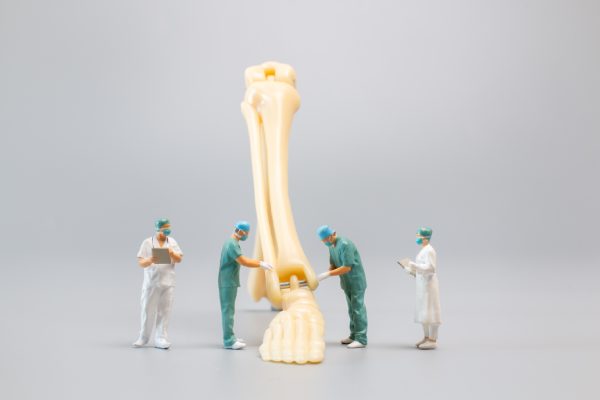
What a bunion actually is
A bunion (hallux valgus) looks like a bump growing on the side of the foot, but the bump is mostly an illusion of alignment: the first metatarsal, the long bone behind the big toe, drifts outward while the big toe angles inward toward its neighbours. The prominent knuckle that rubs in shoes is the head of that drifted bone. This matters because it dictates the treatment: you cannot durably fix a drifted bone by shaving the bump; you fix it by putting the bone back in line. Genetics load the dice (bunions run strongly in families and in certain foot shapes); narrow shoes aggravate and accelerate, but rarely cause alone.
When surgery is worth it, and when it isn't
The most-searched question about bunions deserves a candid answer. Surgery is worth it when the bunion hurts, is progressing, deforms your shoe choices, or is starting to crowd the second toe. In that situation, correction is one of foot surgery's most satisfying operations. Surgery is usually not worth it for a painless bump that only bothers you in photographs: recovery is real, risks are real, and a comfortable foot rarely justifies them. Conservative care, wider shoes, pads, toe spacers, and managing any associated arch mechanics, does not straighten the toe, but it legitimately manages symptoms and is always offered first when the picture allows.
How modern bunion correction works
Correction is planned from standing foot X-rays that grade the deformity's angles. The surgeon then performs an osteotomy, a controlled cut, most commonly a chevron or scarf pattern, shifts the metatarsal back into alignment, balances the soft tissues around the joint, and fixes the correction with one or two small buried screws that normally stay for life unnoticed. For suitable feet, minimally invasive (percutaneous) techniques achieve the same realignment through a few millimetre-scale incisions. The operation is done as a day case or with one night's stay, under regional or general anesthesia, and takes well under an hour per foot.
Recovery timeline
| Milestone | Typical timing |
|---|---|
| Walking in stiff surgical shoe | Immediately |
| Fly home | Days 3-7 |
| Stitches out / wound settled | ~Week 2 |
| Comfortable normal shoes | Weeks 6-8 |
| Swelling largely settled | Months 3-6 |
| Impact sport | ~Month 3 |
The recovery fact nobody tells you: swelling outlasts pain. Discomfort settles within days to a couple of weeks, but feet, being the lowest point of the body, hold swelling stubbornly, expect the foot to look slightly fuller for some months even while it feels fine. Elevation in the early weeks is the single best thing you can do for it.
Bunion surgery cost in Turkey
All-inclusive correction runs $2,500-$5,500 per foot depending on severity and technique, covering surgery, anesthesia, the surgical shoe, imaging and transfers, against $6,000-$12,000+ in the US. Both feet in one trip is common for international patients and quoted after X-ray review, alongside an honest discussion of simultaneous versus staged correction.
Your journey with Live Taller Now, step by step
Travelling abroad for bunion surgery works best when every stage is mapped before you board a plane. Our international-patient pathway is deliberately transparent:
- Day 0
Free remote assessment
You send your imaging and a short health history. The surgeon confirms whether you are a candidate, what is achievable, and which technique suits you, then you receive a fixed, written, all-inclusive quote with nothing hidden.
- Before travel
Planning & scheduling
We agree your dates, explain exactly what to bring, and prepare your pre-operative checklist. Your coordinator is reachable on WhatsApp throughout, in English.
- Arrival week
Surgery & hospital care
Airport VIP pickup, pre-operative tests and clearance, then surgery. You recover in a private hospital room with pain management and your first physiotherapy session.
- In Istanbul
Supervised early recovery
Daily physiotherapy, wound checks and scheduled imaging through the phase that matters most, with 24/7 support at your accommodation.
- Back home
Remote follow-up
You fly home with a written aftercare protocol any local clinician can follow, and continue scheduled reviews with the surgeon who treated you.
Why patients choose Live Taller Now in Istanbul
Istanbul has become one of among the world's leading destinations for orthopedic surgery, and the reason is not only price, though all-inclusive packages here cost a fraction of US and UK rates. It is the combination of an licensed private hospital, a surgeon for whom these operations are core daily practice, dedicated in-house physiotherapy, and coordinators who manage the entire journey in English. Just as importantly, we practise honest candidacy: if your imaging or health profile makes you a poor candidate, or a smaller intervention would serve you better than surgery, you will be told so plainly, with the reasons. Every figure on this page reflects real orthopedic practice rather than marketing, and every quote is fixed in writing before you commit. You can read about your surgeon on the Our Doctor page.
Risks, and how they are minimized
Bunion correction is routine but not trivial. The candid list: recurrence (uncommon with true bony correction), prolonged swelling, stiffness of the big-toe joint, nerve tingling near the scar, and, rarely, overcorrection or healing problems at the osteotomy. Minimization is concrete: correcting the alignment rather than shaving the bump, stable screw fixation, early protected walking with elevation discipline, and not smoking, which impairs bone healing here as everywhere. Severity grading on X-ray also matters: matching the technique to the deformity, rather than using one operation for every foot, is what keeps recurrence rates low.
Open versus minimally invasive correction
Both routes aim at the identical target, realigning the drifted metatarsal, and the choice between them is about matching technique to deformity. Open correction (chevron or scarf osteotomy through a conventional incision) remains the gold standard for visibility and control, comfortably handles moderate-to-severe angles, and allows precise soft-tissue balancing around the joint. Minimally invasive (percutaneous) correction performs the same cuts through millimetre incisions under X-ray guidance: less scarring, often less early swelling, strong appeal for suitable feet, with the caveat that "suitable" is doing real work in that sentence, since very large or complex deformities are still better served open. Recovery timelines are broadly similar because both rely on the bone healing in its corrected position. We offer both and recommend from your X-ray angles, not from fashion; the technique, like the implant screws, is named in your written plan.
The second toe, and other deformities that travel with bunions
Bunions rarely arrive alone. As the big toe drifts, it shoulders load onto its neighbour, which is why long-standing bunions so often bring a hammer second toe, a painful callus under the ball of the foot, or, on the outer edge, a smaller "tailor's bunion" at the little toe. This matters for planning: correcting the bunion while ignoring an established hammer toe leaves you with a straight big toe beside a clawed neighbour, and sometimes a second recovery later. At assessment we examine and X-ray the whole forefoot, and where companion deformities need addressing, they are corrected in the same operation, a few extra minutes of surgery that saves a second trip. Your quote lists exactly what is being corrected, so "bunion surgery" never quietly expands on the day. It is also why we ask for standing photographs of the whole foot with your X-rays rather than a cropped picture of the bump.
Recovery at home: elevation, footwear and the weeks that follow
Bunion recovery is genuinely easy to get right if you respect two rules. Rule one: elevation. For the first two weeks, the foot lives above heart level whenever you are not walking, "toes above the nose," cushions on the sofa, a pillow under the mattress end. Feet are the lowest point of the body and collect swelling relentlessly; elevation is the difference between a comfortable recovery and a throbbing one, and it directly speeds your return to normal shoes. Rule two: footwear discipline. Weeks 0-6 belong to the stiff surgical shoe for every step, including at home; weeks 6-8 transition into wide, soft trainers as swelling allows; from week 8 onward, footwear widens back to normal, with the one honest caveat that narrow, pointed styles that helped create the problem are best retired permanently. Sleep with the foot free of tight bedding, keep the dressing dry until review, and start the gentle toe-mobility exercises we teach you from week two so the corrected joint heals moving rather than stiff. Most patients are surprised how walkable the whole process is; the surgical shoe, not pain, is the main daily reminder anything happened.
Will the big toe move and work normally afterwards?
A corrected toe is meant to be used, and this concern deserves a direct answer. The osteotomy realigns the bone behind the joint rather than fusing the joint itself, so the big toe's bend is preserved, early mobility exercises from week two exist precisely to keep it. Expect some stiffness through the first two to three months while swelling occupies the joint's space; range then returns progressively, and by month three most patients push off the big toe in normal walking without thinking about it. Full sporting push-off follows over the months after. Two honest caveats: a toe that arrives with arthritis already inside the joint may keep some of that pre-existing stiffness (we grade this on X-ray and tell you beforehand), and severe long-standing deformities corrected late regain function more slowly than moderate ones corrected in time, one more argument for treating a progressing bunion before it finishes progressing.
Anesthesia for bunion surgery
Most corrections here are performed under regional anesthesia, an ankle or popliteal block that numbs the foot completely while you stay comfortably sedated, with general anesthesia available where preferred or indicated. The block carries a bonus most patients only appreciate afterwards: it keeps working for many hours beyond the operation, so the first evening, typically the sorest of any foot surgery, passes in comfort and oral medication takes over from a running start. You are eating, mobile in the surgical shoe, and ready for discharge the same day or after one observed night.
Frequently asked questions
Is bunion surgery worth it?
For a painful, progressive bunion that limits shoes and activity, yes, satisfaction rates are high and modern corrections are durable. For a painless bump that only bothers you cosmetically, surgery is usually not advised: every operation carries recovery and risk, and a comfortable foot rarely justifies them. We tell you which side of that line your foot is on.
Does a bunion come back after surgery?
With a properly performed bony correction (osteotomy), recurrence is uncommon; it was mainly a problem of older 'shaving' procedures that removed the bump without realigning the bone, which is why we correct the alignment itself. Published recurrence rates vary with deformity severity and technique.
Can I walk after bunion surgery?
Yes, most modern techniques allow immediate protected walking in a stiff-soled surgical shoe, without crutches for most patients. You transition to comfortable normal shoes at around 6-8 weeks as swelling settles.
Can both feet be operated at once?
They can, and international patients often prefer one trip and one recovery. The trade-off is that early walking is clumsier with both feet in surgical shoes. We discuss simultaneous versus staged honestly based on your bunion severity, home support, and preference.
How much does bunion surgery cost in Turkey?
All-inclusive bunion correction in Turkey typically runs $2,500-$5,500 per foot, depending on severity and technique, versus $6,000-$12,000+ in the US. Both-feet packages are quoted after X-ray review.
What is a bunion?
A bunion (hallux valgus) is not a growth but a misalignment: the long bone behind the big toe drifts outward while the big toe angles inward, and the bump you see is the exposed head of that drifted bone. This is why durable correction realigns the bone rather than shaving the bump.
What causes a bunion?
Genetics load the dice, bunions run strongly in families and in certain foot shapes, and narrow, pointed shoes aggravate and accelerate them, though they rarely cause a bunion alone. Conditions like inflammatory arthritis can also contribute.
Do bunion correctors and splints work?
Splints, toe spacers, and pads can ease symptoms and slow aggravation, and they are worth trying for comfort. What they cannot do is realign the bone or reverse the deformity, a drifted bone does not move back into place without surgery. Marketing that claims otherwise is overstating what a splint can achieve.
Can you pop a bunion back into place?
No. The bump is bone that has permanently drifted out of alignment, not a joint that has slipped, so it cannot be pushed, cracked, or popped back. Genuine correction requires an osteotomy to re-angle the bone.
Why do some say bunion surgery is not recommended?
That caution applies to operating on a painless bump for cosmetic reasons alone, surgery carries recovery and risk that a comfortable foot rarely justifies. For a painful, progressing bunion that limits shoes and activity, modern correction is highly effective and satisfaction rates are high. The honest line is: treat problems, not appearances.
Is bunion surgery painful, and how long is recovery?
Discomfort is modest and usually settles within days to a couple of weeks, helped by a long-acting anesthetic block that carries you through the first evening. You walk immediately in a stiff surgical shoe, move to normal shoes at 6-8 weeks, and see swelling settle over some months, swelling outlasts pain in the foot.
Is bunion surgery covered by insurance?
A painful, functionally limiting bunion is often considered medically necessary and may be partly covered, whereas purely cosmetic correction is not. We provide the imaging and medical report your insurer needs; coverage depends on your policy and country.
Find out what your bunion actually needs
Send standing photos and, ideally, foot X-rays. The surgeon grades the deformity and tells you honestly whether surgery is warranted, free, within 48 hours.