Arthroplasty
Knee Replacement Surgery in Turkey
 Op. Dr. Serdar Karaman, Orthopedics & Traumatology
Live Taller Now, Istanbul · Last updated July 2026
In short: knee replacement resurfaces a worn, arthritic knee with smooth metal-and-polyethylene components, relieving the bone-on-bone pain that no longer responds to medication or physiotherapy. The operation takes 1-2 hours, you walk the next day, fly home in 10-14 days, and modern implants commonly last 15-20 years or more. All-inclusive Turkey packages: $8,000-$15,000.
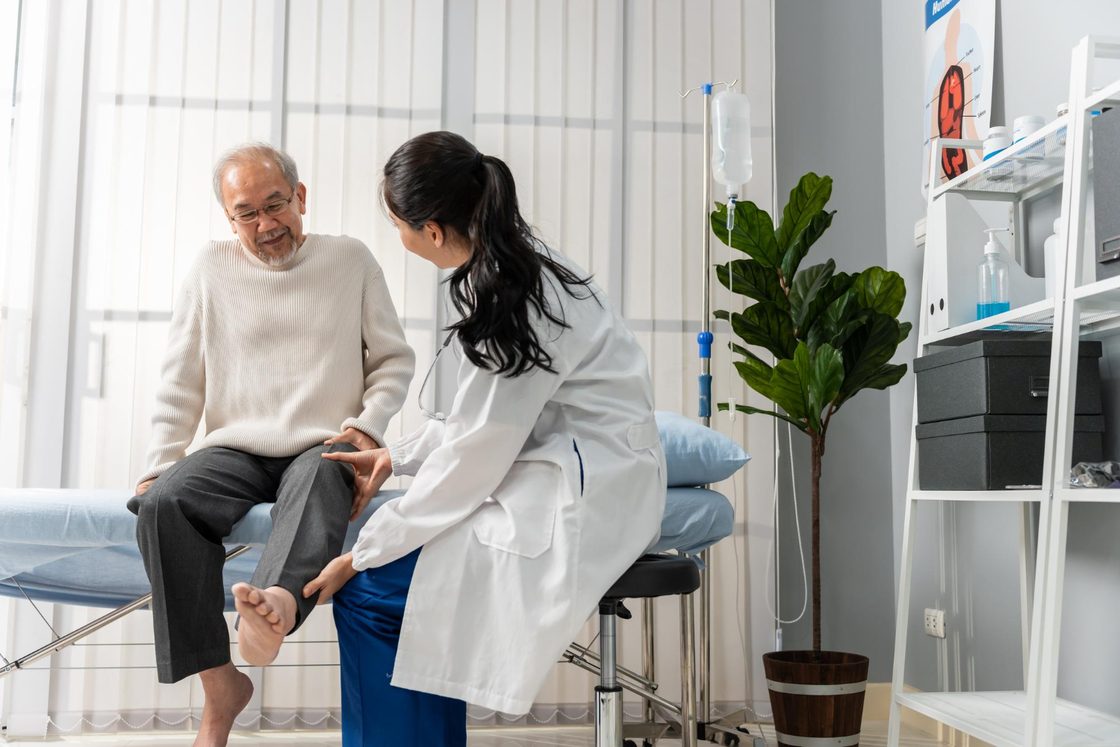
What is a knee replacement?
A knee replacement, total knee arthroplasty, does not remove your knee; it resurfaces it. The worn cartilage and a thin layer of bone at the end of the femur and top of the tibia are removed and replaced with precisely shaped metal components, separated by a medical-grade polyethylene insert that acts as the new cartilage. When arthritis is confined to one side of the joint, a smaller partial (unicompartmental) replacement can resurface only the damaged compartment, preserving the healthy rest of the knee and typically allowing a quicker recovery. Which is right for you is decided from your X-rays, not preference alone.
How do you know you need a knee replacement?
Replacement is end-stage treatment, offered when the joint is genuinely worn out and simpler measures have stopped working. The classic picture: X-rays showing bone-on-bone contact, pain that now intrudes at rest and at night rather than only with activity, stiffness that limits stairs and walking distance, and no lasting relief from medication, physiotherapy or injections. If your imaging shows earlier-stage arthritis, we will say so, options such as realignment osteotomy (see our bow legs and knock knees pages) can protect a younger knee and postpone replacement, and recommending them when appropriate is part of honest practice.
How the operation works
Under spinal or general anesthesia, through a front-of-knee incision, the surgeon removes the damaged surfaces using precision guides, checks alignment and ligament balance, and fixes the implants, usually with bone cement. The whole procedure takes 1-2 hours. You stand and take your first steps with support the same day or the next morning, because early movement is both safe and protective against stiffness and clots. Hospital stay is typically 3-4 nights, with physiotherapy from day one.
The honest part: early pain and why it happens
Patients deserve a straight answer to the most-searched question about this operation. The first two weeks after a knee replacement are genuinely uncomfortable, more so than many expect given how routine the surgery is. The reasons are anatomical: the knee sits just under the skin with little muscle padding, the soft tissues around it are stretched during surgery, and rehabilitation requires bending the new joint early, precisely when it is most tender. Modern anesthesia softens this considerably, nerve blocks, local infiltration and layered oral medication, and the discomfort improves markedly from week three onward. The patients happiest at three months are consistently the ones who did their exercises through the uncomfortable first fortnight; a knee that is not bent early becomes a stiff knee that is far harder to fix later.
Recovery timeline
| Milestone | Typical timing |
|---|---|
| First steps with walker | Day 0-1 |
| Hospital discharge | Day 3-4 |
| Fly home (with clot precautions) | Days 10-14 |
| Walking without aids | Weeks 3-6 |
| Driving | Weeks 4-6 |
| Most daily activities comfortable | Weeks 6-12 |
| Final strength and range | 6-12 months |
Knee replacement cost in Turkey
All-inclusive packages run $8,000-$15,000, covering the surgeon, implant, anesthesia, hospital stay, physiotherapy, medications and transfers, against $35,000-$60,000+ for the surgery alone in the United States, before rehabilitation is counted. Implant brands used are the same international manufacturers found in Western hospitals; ask us to name the implant in your written quote, and we will. Both knees can be replaced in one anesthesia or staged, quoted after imaging review.
Your journey with Live Taller Now, step by step
Travelling abroad for knee replacement works best when every stage is mapped before you board a plane. Our international-patient pathway is deliberately transparent:
- Day 0
Free remote assessment
You send your imaging and a short health history. The surgeon confirms whether you are a candidate, what is achievable, and which technique suits you, then you receive a fixed, written, all-inclusive quote with nothing hidden.
- Before travel
Planning & scheduling
We agree your dates, explain exactly what to bring, and prepare your pre-operative checklist. Your coordinator is reachable on WhatsApp throughout, in English.
- Arrival week
Surgery & hospital care
Airport VIP pickup, pre-operative tests and clearance, then surgery. You recover in a private hospital room with pain management and your first physiotherapy session.
- In Istanbul
Supervised early recovery
Daily physiotherapy, wound checks and scheduled imaging through the phase that matters most, with 24/7 support at your accommodation.
- Back home
Remote follow-up
You fly home with a written aftercare protocol any local clinician can follow, and continue scheduled reviews with the surgeon who treated you.
Why patients choose Live Taller Now in Istanbul
Istanbul has become one of among the world's leading destinations for orthopedic surgery, and the reason is not only price, though all-inclusive packages here cost a fraction of US and UK rates. It is the combination of an licensed private hospital, a surgeon for whom these operations are core daily practice, dedicated in-house physiotherapy, and coordinators who manage the entire journey in English. Just as importantly, we practise honest candidacy: if your imaging or health profile makes you a poor candidate, or a smaller intervention would serve you better than surgery, you will be told so plainly, with the reasons. Every figure on this page reflects real orthopedic practice rather than marketing, and every quote is fixed in writing before you commit. You can read about your surgeon on the Our Doctor page.
Risks, and how they are minimized
Knee replacement is one of the most successful operations in medicine, but risks exist and deserve naming: infection, blood clots, stiffness, ongoing discomfort in a minority of patients, and eventual implant wear. Each has a specific countermeasure, antibiotic protocols and laminar-flow theatres against infection, anticoagulation and early walking against clots, structured physiotherapy against stiffness, and accurate alignment for implant longevity. Your personal risk profile (weight, diabetes control, smoking status) is reviewed honestly at assessment, because optimizing it before surgery is the cheapest complication insurance there is.
Partial or total, how the choice is made
Roughly one in ten arthritic knees has damage confined to a single compartment, and for those knees a partial (unicompartmental) replacement is a genuinely attractive option: a smaller incision, preservation of both cruciate ligaments and the healthy compartments, a knee that tends to feel more "natural," and a quicker early recovery. The decision, however, is made by your imaging and ligament examination rather than preference, a partial implant placed into a knee whose disease later spreads is a partial that gets revised. This is why we grade every compartment on your X-rays (and MRI where needed) before recommending either option, and why the honest recommendation is sometimes the total replacement even when a partial is technically possible: durability of the decision matters as much as the operation. Whichever is chosen, the implant model is named in your written quote.
Life with a new knee: what you can and can't do
A well-done knee replacement should disappear into your life, with a few honest asterisks worth knowing in advance. Encouraged for life: walking without distance limits, cycling, swimming, golf, hiking, doubles tennis, skiing for experienced skiers, low-impact activity actually protects the implant by keeping muscles strong. Possible but moderated: jogging and singles racquet sports; repetitive impact adds wear, so most surgeons advise keeping running occasional rather than a training habit. The famous kneeling question: kneeling on a replaced knee is not harmful to the implant, but many patients find it uncomfortable on the scar and padding-free front of the knee, a cushion solves most of it, and comfort usually improves through the first year. Stairs, driving, air travel and intimacy all return to normal within the recovery windows above. The metal will announce itself at airport security; we provide an implant card, and scanners are entirely safe. Most patients report the moment they stop thinking about the knee daily somewhere between months three and six, the quiet definition of success.
Preparing for knee replacement: the weeks before matter
The best knee replacements are half-won before the anesthetic starts, and preparation is squarely in your hands. Prehabilitation: four to six weeks of quadriceps and hip strengthening before surgery measurably speeds recovery afterwards, a strong muscle sleeve is what carries the new joint through early rehab, and we send a simple pre-op programme with your surgical date. Weight: every kilogram lost is roughly four fewer kilograms crossing the knee with each step; even modest reduction lowers infection and clot risk and lengthens implant life. Dental and skin checks: untreated dental infection or skin breaks near the knee are seeded infection waiting to happen, so both are cleared beforehand. Smoking and blood sugar: stop the first, control the second, both are quiet saboteurs of wound and bone healing. Home prep: before you travel, stage your recovery, clear walking routes, a firm chair with arms, essentials at counter height, and a helper for the first fortnight home. None of this is glamorous; all of it shows up in how your twelfth week feels.
Both knees in one trip?
When both knees are worn, international patients naturally ask about doing both at once. Simultaneous bilateral replacement is real and, for the right candidate, good cardiac health, strong motivation, solid home support, it means one anesthesia, one trip, one rehabilitation. The honest trade-off is a harder first fortnight, since there is no "good leg" to lean on, and a slightly higher medical demand on the body, which is why candidacy is screened more strictly. The alternative is staging the knees three to six months apart, each recovery easier but the journey doubled. We recommend from your health profile and imaging rather than from a policy: some patients are excellent bilateral candidates, others are far better served staged, and you will be told which you are, with the reasoning and both prices in writing.
Frequently asked questions
How long does a knee replacement last?
Modern knee implants are very durable: large registry studies show that well over 90% are still functioning at 15-20 years, and many now last 20-25 years. Longevity depends on activity level, body weight, and surgical accuracy, one reason implant positioning is checked carefully during and after surgery.
How long does knee replacement surgery take?
The operation itself typically takes 1-2 hours under spinal or general anesthesia. With preparation and recovery-room time, expect to be away from your room for a few hours. Hospital stay is usually 3-4 nights.
Why is there so much pain after knee replacement?
The knee is a superficial joint surrounded by soft tissue that is stretched and repaired during surgery, and early physiotherapy deliberately bends the new joint while it is still healing, a demanding combination. Pain peaks in the first 1-2 weeks, is managed with nerve blocks and layered medication, and improves markedly by weeks 3-6. Committing to the exercises despite discomfort is what produces a well-bending knee.
When can I fly home after knee replacement in Turkey?
Most international patients fly home 10-14 days after surgery, once the wound is checked and physiotherapy milestones are met. We apply clot-prevention measures (medication, compression, in-flight movement guidance) and provide a written protocol for your journey.
How much does knee replacement cost in Turkey?
All-inclusive knee replacement packages in Turkey typically run $8,000-$15,000, covering surgery, the implant, hospital stay, physiotherapy and transfers, versus $35,000-$60,000+ for surgery alone in the US. Bilateral (both-knee) packages are quoted after imaging review.
What is a knee replacement?
A knee replacement resurfaces a worn, arthritic knee rather than removing it: the damaged cartilage and a thin layer of bone are replaced with smooth metal components and a polyethylene insert that acts as new cartilage, restoring pain-free movement. When damage is confined to one side, a partial replacement resurfaces only that compartment.
How long is recovery from a knee replacement?
Assisted walking begins the same or next day, most patients walk without aids by weeks 3-6, drive by weeks 4-6, and manage daily life comfortably by 6-12 weeks. Final strength and range of motion continue improving up to a year.
Partial or total knee replacement, which is better?
Neither is universally better. A partial replacement suits knees with arthritis in only one compartment and offers a quicker, more natural-feeling recovery; a total replacement is the durable choice when disease is more widespread. Your X-rays and ligament examination decide, and durability of that decision matters as much as the operation.
Can I kneel after a knee replacement?
Kneeling does not harm the implant, but many patients find it uncomfortable on the scar and the padding-free front of the knee. A cushion helps, and comfort usually improves through the first year, most people can kneel when they choose to, they simply prefer not to at first.
What can't I do after a knee replacement?
High-impact, repetitive activities like regular running, jumping sports, and heavy contact sport are best kept occasional or avoided, since impact accelerates wear. Almost everything else, walking, cycling, swimming, golf, hiking, doubles tennis, skiing for the experienced, is encouraged, because staying active protects the joint.
How do I know if I need a knee replacement?
The classic picture is X-rays showing bone-on-bone arthritis, pain that now intrudes at rest and at night, stiffness that limits stairs and walking, and no lasting relief from medication, physiotherapy, or injections. If your imaging shows earlier-stage arthritis, realignment or conservative care may protect the knee for longer.
Sources & medical references
Survival figures on this page are population averages drawn from national joint replacement registries and peer-reviewed meta-analysis; individual outcomes vary with implant, technique, and patient factors.
- Evans JT, Walker RW, Evans JP, Blom AW, Sayers A, Whitehouse MR. "How long does a knee replacement last? A systematic review and meta-analysis of case series and national registry reports with more than 15 years of follow-up." The Lancet, 2019;393(10172):655-663.
- Australian Orthopaedic Association National Joint Replacement Registry (AOANJRR). Hip, Knee & Shoulder Arthroplasty Annual Report.
- National Joint Registry (NJR) for England, Wales, Northern Ireland, the Isle of Man and States of Guernsey. Annual Report.
- NHS. "Knee replacement" (patient information).
This page is general medical information, reviewed against the sources above, and does not replace a consultation with a qualified surgeon.
Find out if your knee needs replacement, or something smaller
Send your knee X-rays. The surgeon tells you honestly whether replacement, realignment, or conservative care fits your stage, free, within 48 hours.