Deformity correction
Bow Legs Correction in Turkey (Genu Varum)
 Op. Dr. Serdar Karaman, Orthopedics & Traumatology
Live Taller Now, Istanbul · Last updated July 2026
In short: adult bow legs (medically, genu varum) are a bone-shape problem, so exercises and braces cannot straighten them, a corrective osteotomy can. Realigning the tibia moves weight off the overloaded inner knee, straightens the visible curve, and slows or prevents early arthritis. In Turkey, correction typically costs $8,000-$18,000 all-inclusive, and can be combined with lengthening.
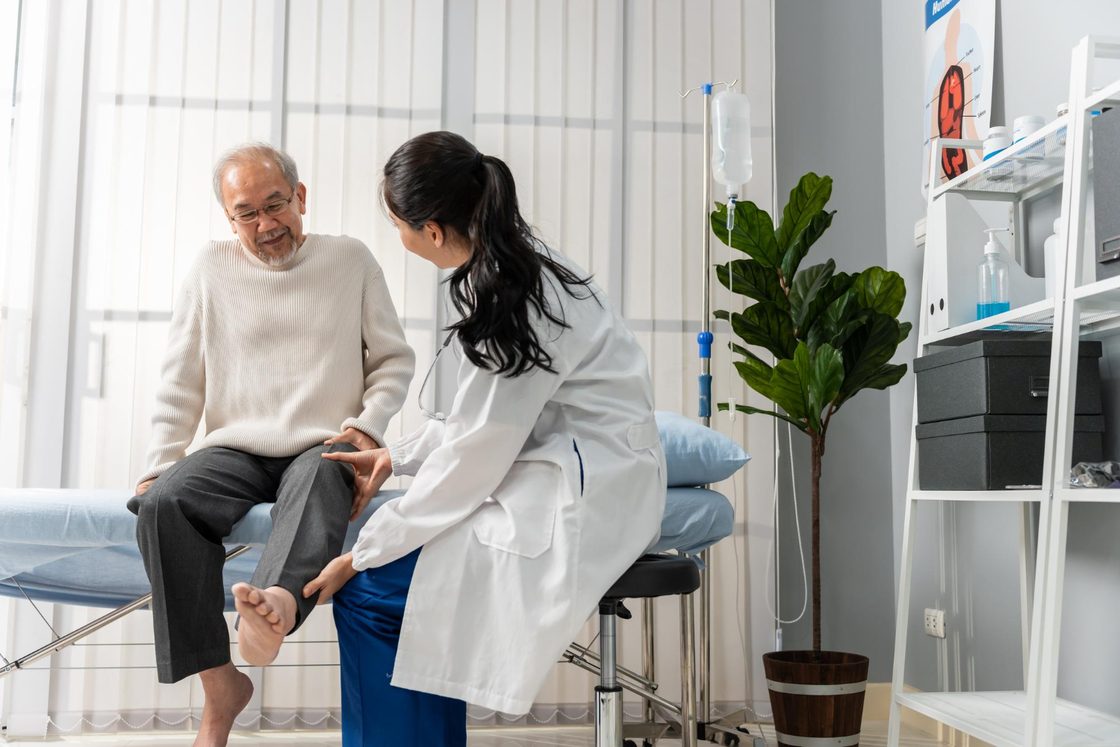
What are bow legs (genu varum)?
Genu varum, the medical term for bow legs, describes an outward curve of the legs in which the knees remain apart while the ankles touch when you stand with your feet together. A small degree of bowing is completely normal in toddlers and usually straightens by age three or four. When bowing persists into adulthood, or develops later through metabolic or traumatic causes, the deviation is built into the shape of the tibia (and sometimes the femur), not the muscles around it.
That distinction is the key to every honest answer about bow legs: because the curve lives in the bone, the only way to genuinely straighten an adult's bow legs is to change the bone's geometry surgically. Everything else manages symptoms rather than correcting the deformity.
Why bow legs matter beyond appearance
Genu varum shifts your body weight onto the inner (medial) compartment of each knee. Instead of load spreading evenly across the joint, it concentrates on one side, and year after year that overload wears the medial cartilage first. This is why untreated bow legs are a well-recognized route to early medial knee osteoarthritis, and why, once arthritis sets in, the leg can appear to bow even more as the joint space collapses. Correcting the mechanical axis redistributes load across the whole knee, relieving that concentrated stress and, when done before cartilage is worn, protecting the joint for the long term.
What causes bow legs in adults?
- Residual childhood bowing, physiologic varus that never fully corrected
- Rickets / vitamin D deficiency during the growing years, softening and bending bone
- Blount's disease, a growth disorder affecting the inner part of the upper tibia
- Fracture malunion or growth-plate injury that healed with an angle
- Advanced medial knee arthritis, which both results from and worsens varus
Can you fix bow legs without surgery?
For an adult, the truthful answer is that you cannot straighten the actual curve without surgery, but conservative care still has a real role. Strengthening the muscles around the hip and knee improves stability and reduces pain; managing body weight lowers the load on the inner compartment; and lateral-wedge insoles can shift some pressure away from the worn side. These measures are genuinely worthwhile for symptoms and for slowing arthritis, and we recommend them to every patient. What they cannot do is re-angle a bone that has finished growing. Any programme marketed as "bow-leg-straightening exercises" for adults is selling a change in geometry that muscle work cannot produce. (In young children, by contrast, mild physiologic bowing usually resolves without any treatment at all.)
How bow legs correction surgery works
Correction begins with standing long-leg X-rays that map your exact deformity, where the apex of the curve sits, and how many degrees the mechanical axis deviates. From that plan, the surgeon performs an osteotomy, a precise cut in the bone, and re-angles it to a straight axis. Because varus most often originates in the upper tibia, the standard operation is a high tibial osteotomy (HTO), with the corrected position held by a locking plate. For larger or more complex deformities, correction can be performed gradually using an external fixator, adjusting the angle millimeter by millimeter over weeks, the same distraction principle used in lengthening, which also allows deformity and lengthening to be addressed together in one plan when a patient wants both.
Recovery after bow legs correction
Recovery depends on whether the correction was acute (plate-fixed) or gradual (fixator), but a typical timeline involves protected weight-bearing for about six weeks while the osteotomy heals, a return to comfortable everyday walking around three months, and clearance for sport between six and nine months. Physiotherapy throughout restores strength and range of motion. As with any osteotomy, not smoking and maintaining good vitamin D and bone health measurably improve healing.
Bow legs correction cost in Turkey
Bilateral bow legs correction in Turkey typically costs $8,000-$18,000 all-inclusive, with the range driven by the technique used and the length of stay. As with our lengthening packages, the price covers surgery, implants, hospital stay, imaging, physiotherapy and transfers. Your exact, fixed quote follows a free review of your standing long-leg X-rays.
Your journey with Live Taller Now, step by step
Travelling abroad for bow legs correction works best when every stage is mapped before you board a plane. Our international-patient pathway is deliberately transparent:
- Day 0
Free remote assessment
You send your X-rays and a short health history. The surgeon confirms whether you are a candidate, what is safely achievable, and which method suits your anatomy, then you receive a fixed, written, all-inclusive quote with nothing hidden.
- Before travel
Planning & scheduling
We agree your dates, explain exactly what to bring, and prepare your pre-operative checklist. Your coordinator is reachable on WhatsApp throughout, in English.
- Arrival week
Surgery & hospital care
Airport VIP pickup, pre-operative tests and clearance, then surgery. You recover in a private hospital room with pain management and your first physiotherapy before moving to serviced accommodation.
- In Istanbul
Supervised recovery
Daily physiotherapy, scheduled X-rays and 24/7 support through the phase that matters most. Nothing about your recovery is left to chance or done unsupervised.
- Back home
Remote follow-up
You fly home with a written aftercare protocol any local orthopedist can follow, and continue scheduled X-ray reviews with the surgeon who treated you.
Bow legs and knee arthritis: the connection explained
The most important reason to take significant genu varum seriously is its well-documented link to early osteoarthritis of the inner knee. Think of the knee as a joint designed to share load evenly between its inner and outer compartments. A bowed leg breaks that balance, routing a disproportionate share of every step through the medial compartment. Cartilage is durable but not limitless, and decades of concentrated load wear the inner surface faster than it should. As that cartilage thins, the joint space narrows and the leg can bow further, which increases the load again, a self-reinforcing cycle. Correcting the mechanical axis interrupts it: by redistributing weight across the whole joint, a realignment osteotomy can relieve pain and, when performed before the cartilage is badly worn, meaningfully delay or prevent the arthritis that would otherwise follow. This is why surgeons often recommend correcting a significant deformity even in a knee that is not yet painful.
Acute versus gradual correction: which and why
There are two ways to correct a bowed leg, and the choice depends on the size and complexity of the deformity. Acute correction re-angles the bone in a single operation and holds it with a plate; it is efficient and well suited to moderate, straightforward deformities. Gradual correction uses an external fixator to adjust the angle a little each day over several weeks, the same distraction principle used in lengthening, and is preferred for large deformities, cases that also need lengthening, or situations where stretching the soft tissues slowly is safer for the nerves. The surgeon selects the approach from your standing long-leg X-rays and explains the reasoning as part of your written plan.
Why patients choose Live Taller Now in Istanbul
Turkey has become the world's highest-volume destination for limb lengthening and deformity correction, and Istanbul sits at its centre. The advantage is not simply price, though all-inclusive packages here run a fraction of US and UK costs, it is the combination of an licensed private hospital, a surgeon who performs these operations as a core part of his practice, dedicated in-house physiotherapy, and coordinators who manage the entire journey in English. Just as importantly, we practise honest candidacy: if your X-rays or health profile make you a poor candidate, or your goal exceeds safe limits, you will be told so plainly, with the reasons. Every figure on this page, the gain limits, the 1 mm/day rate, the recovery windows, reflects real orthopedic practice rather than marketing, and every quote is fixed in writing before you commit. You can read more about your surgeon on the Our Doctor page.
Risks of bow legs correction, and how they are minimized
Osteotomy to correct bow legs is a reliable procedure, but as with any bone surgery there are risks worth understanding: infection, delayed healing at the osteotomy, blood clots, temporary nerve irritation from realignment, and, the outcome that matters most, under- or over-correction of the angle. Each is managed deliberately. Correction is planned precisely from calibrated standing X-rays rather than estimated; healing is protected by staged weight-bearing and a strict no-smoking requirement; clot risk is reduced with an anticoagulation protocol; and gradual correction is chosen when slow soft-tissue stretching is safer for the nerves. Physiotherapy throughout restores strength and motion, and follow-up imaging confirms the axis is where it was planned to be before you return to full activity.
What results can you expect from correction?
A successful bow legs correction changes three things you can see and feel. First, alignment: standing long-leg X-rays after healing show the mechanical axis restored to a straight line through the knee, which is the objective measure surgeons care about most. Second, appearance: the outward curve is visibly reduced or eliminated, and legs stand closer together at the knees. Third, load and symptoms: weight is redistributed across the whole knee joint, which relieves the concentrated inner-compartment stress that drives medial pain and cartilage wear. Patients who were experiencing ache on the inner knee frequently report meaningful relief once they are through rehabilitation. It is important to set expectations honestly, though, correction is a structural realignment, not a cosmetic guarantee of perfectly straight legs to the millimeter, and the primary medical goal is a healthy mechanical axis that protects the joint. Where a patient also wants added height, combining correction with lengthening can address both in one plan, which the surgeon assesses from your imaging.
Frequently asked questions
What is the medical term for bow legs?
The medical term is genu varum. It describes legs that curve outward so the knees stay apart while the ankles touch when you stand with feet together. The opposite deformity, knock knees, is called genu valgum.
How do you correct bow legs in adults?
In adults the curve is in the bone, so it is corrected with a realignment osteotomy, most often a high tibial osteotomy that cuts and re-angles the tibia to a straight mechanical axis, fixed with a plate or nail. Large curves can be corrected gradually with a fixator. Exercises cannot change bone angle after growth plates close.
Can you fix bow legs without surgery?
Not the actual curvature, in an adult. Strengthening, weight management and lateral-wedge insoles can reduce symptoms and slow cartilage wear, and are worth doing, but they do not straighten a bone that has finished growing. Visible correction in adults requires osteotomy. In young children, mild bowing often resolves on its own.
What causes bow legs in adults?
Residual physiologic bowing from childhood that never fully straightened, rickets or vitamin D deficiency during growth, Blount's disease (a growth-plate disorder of the inner tibia), and fracture malunion or growth-plate injury. Long-standing bow legs also accelerate inner-knee arthritis, which can worsen the appearance over time.
How much does bow legs correction cost in Turkey?
Typically $8,000-$18,000 all-inclusive for bilateral correction, depending on technique (plate-fixed acute correction vs gradual fixator) and length of stay, confirmed in a written quote after X-ray review, and a fraction of Western pricing.
What is the difference between bow legs and knock knees?
Bow legs (genu varum) curve outward, so the knees stay apart while the ankles touch; knock knees (genu valgum) angle inward, so the knees touch while the ankles stay apart. Bow legs overload the inner knee, knock knees the outer knee, and each is corrected by re-angling the bone in the opposite direction.
Can bow legs cause knee arthritis?
Yes, and this is the main medical reason to take significant bow legs seriously. Varus alignment concentrates load on the inner knee compartment, wearing that cartilage faster and driving early medial osteoarthritis. Correcting the axis before the cartilage is worn can meaningfully delay or prevent it.
How do I know if my bow legs need surgery?
Standing long-leg X-rays give the answer by measuring how far your mechanical axis deviates. Visible bowing combined with inner-knee pain, a progressing curve, or significant axis deviation are the classic triggers. Mild, stable, painless bowing may simply be monitored, the free X-ray review tells you which you are.
Are bow legs genetic?
There is often a familial tendency, and some causes (like certain growth-plate disorders) run in families, but bow legs also result from rickets, injury, or arthritis. Whatever the cause, in adults the curve sits in the bone and is corrected surgically rather than inherited-away.
Can bow legs be corrected without breaking the bone?
No, in adults the curve is in the bone's shape, so correction requires a controlled osteotomy (a planned bone cut) to re-angle it. There is no exercise, brace, or non-surgical method that straightens an adult's bow legs; those only manage symptoms.
How long is recovery after bow leg surgery?
Typically protected weight-bearing for about six weeks, comfortable everyday walking by around three months, and clearance for sport between six and nine months, with physiotherapy throughout to rebuild strength and motion.
Do bow legs get worse with age?
They can. As inner-knee cartilage wears under the concentrated load, the joint space narrows and the leg can bow further, which increases the load again, a self-reinforcing cycle. This is why correcting a significant deformity earlier is often better surgery than waiting.
Get your leg alignment assessed
Send your standing X-rays. The surgeon measures your axis deviation and advises whether correction is warranted, honestly, and free, within 48 hours.