
Knee replacement is one of the most common orthopedic operations in the world — but where you have it makes an enormous difference to what you pay and how long you wait. In the United States a knee replacement can cost $30,000 or more, and in the UK or Canada patients often wait many months for elective surgery. That is why a growing number of people now consider knee replacement surgery abroad, where the same procedure in a modern, accredited hospital can cost a fraction of the price with little or no waiting.
Travelling overseas for major surgery is a significant decision, though, and doing it safely takes research. This guide covers what knee replacement abroad actually costs across popular destinations, how to choose a country and clinic you can trust, what the medical-travel journey looks like step by step, and how to get home and recover safely afterwards.
This article is for general information and is not medical advice — always consult a qualified orthopedic surgeon about your own situation.
Why Patients Travel Abroad for Knee Replacement
For most patients, the decision comes down to three things: cost, waiting times, and access to care.
Cost is the biggest driver. A total knee replacement in the United States averages roughly $30,000 to $50,000, and even going privately in the UK costs around £13,000 to £15,000. Overseas, all-inclusive packages commonly range from about $4,500 to $13,000 depending on the country — savings of 50 to 70 percent, even once flights and accommodation are added.
Waiting times matter almost as much. In public systems such as the NHS, or in Canada, waits for an elective knee replacement can stretch from several months to well over a year. Booking treatment abroad usually means scheduling surgery within weeks, which can be life-changing for someone living with daily pain.

Finally, there is access to experienced surgeons and modern facilities. Many hospitals that cater to international patients are high-volume centres whose surgeons trained in Europe or the US, using current implant designs and, at some clinics, robotic or computer-assisted techniques.
Medical tourism has grown into a mainstream option, with orthopedic procedures like knee and hip replacement among the most commonly requested treatments worldwide.
It is worth being honest, though: surgery abroad isn’t right for everyone. Complex cases, significant other health conditions, or a need for close long-term monitoring can make travelling less suitable. The rest of this guide will help you weigh it up properly.
What Knee Replacement Abroad Costs by Country
Prices vary widely by destination. The table below shows typical all-inclusive package ranges compared with the cost at home — treat these as indicative figures that change with the clinic, the implant, and your individual case.
| Destination | Typical all-inclusive package (USD) | Notes |
|---|---|---|
| United States | $30,000 – $50,000 | Home baseline; out-of-pocket varies by insurance |
| United Kingdom (private) | $16,000 – $20,000 | NHS is free but waits are long |
| India | $6,000 – $8,500 | Widely used; JCI hospitals in major cities |
| Mexico | $9,000 – $13,000 | Popular with US patients; short travel |
| Poland | $6,000 – $9,000 | EU standards; popular with UK/EU patients |
| Thailand | $10,000 – $17,000 | Established medical-tourism infrastructure |
| Czech Rep. / Lithuania | $8,000 – $12,000 | EU-regulated, transparent pricing |
Most all-inclusive packages cover the surgeon’s and anaesthetist’s fees, the implant itself, three to five nights in hospital, initial physiotherapy, and often airport transfers and a few hotel nights. Always ask for an itemised quote so you know exactly what is and isn’t included.
Remember that the package price is not your total cost. You will also need to budget for return flights, extra hotel nights (most patients stay 10 to 14 days before flying home), a travel companion, travel and medical insurance that covers pre-existing conditions and complications, and any physiotherapy or follow-up once you are back. Realistically these extras add somewhere between $1,500 and $4,000, depending on the destination and how long you stay.
Why is the same surgery so much cheaper overseas? It usually comes down to lower staffing and facility costs, favourable exchange rates, and — in countries that actively promote medical tourism — government support and strong competition between private hospitals. Lower prices don’t automatically mean lower quality, but they do make it essential to check accreditation and surgeon credentials, which we cover next.
Thinking about Turkey? Turkey is one of the most popular destinations for knee replacement, with JCI-accredited hospitals in Istanbul and surgeons trained to international standards. For Turkey-specific prices, hospitals, and exactly what a package includes, see our dedicated guide: Knee Replacement Surgery in Turkey.
How to Choose the Right Country and Clinic
Once you have a shortlist, compare destinations on more than price. A few factors matter most:
Accreditation. Look for hospitals accredited by Joint Commission International (JCI) or certified to ISO 9001, or — within the EU — meeting national regulatory standards. JCI is the most widely recognised international marker of patient-safety and quality standards, and you can confirm a hospital’s status on the official JCI directory.
Surgeon experience. Outcomes tend to be better at high-volume centres. As a general rule, a surgeon performing 50 or more knee replacements a year is a reassuring sign.
Travel and logistics. Shorter flights mean lower clot risk and easier follow-up. Weigh flight time, whether there are direct routes, and how far the hospital is from the airport and your accommodation.
Language and support. Confirm that surgeons, nurses, and an international patient coordinator speak your language, so nothing is lost at a critical moment.
Aftercare. Ask what physiotherapy is included, how remote follow-up works once you are home, and — importantly — how the clinic handles complications.
Be alert to red flags:
- Glossy before-and-after galleries with no mention of recovery or risks
- Promises of “instant” or same-day recovery
- No named surgeon or verifiable credentials
- Pressure to pay in full upfront without a written breakdown
- No clear plan for managing complications
Once you’ve shortlisted a clinic, it’s worth asking detailed questions about the surgeon’s annual caseload, the specific implant used, and complication support. Our Turkey guide includes a full surgeon-vetting checklist you can adapt for any destination.
It also pays to do your own due diligence. Read independent patient reviews on third-party sites rather than only the clinic’s own testimonials, ask whether you can speak to a former patient, and get a second opinion from a surgeon at home first — confirming you genuinely need a replacement and are fit to travel.
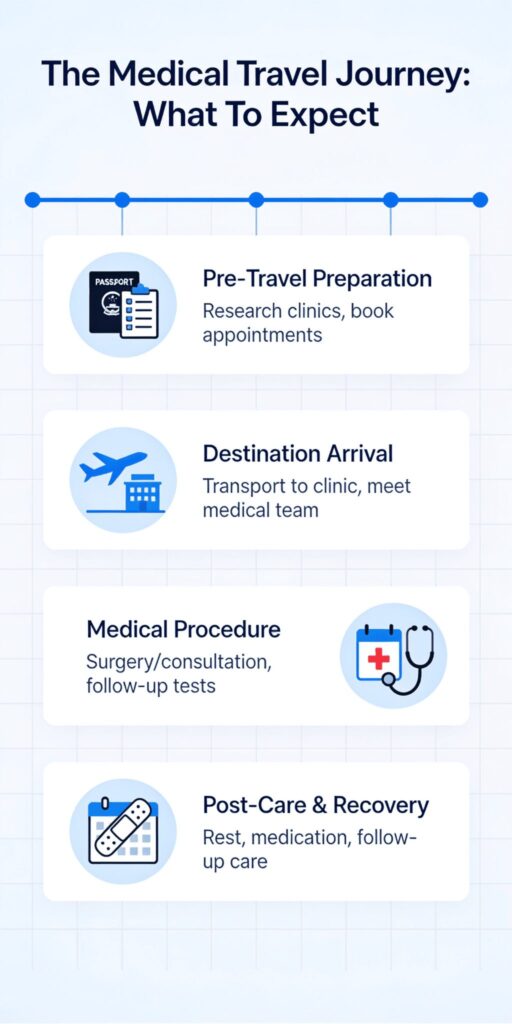
The Medical-Travel Journey: What to Expect
Knowing the sequence in advance makes the whole process far less daunting. A typical knee replacement trip looks like this:
| Stage | Timing | What happens |
|---|---|---|
| 1. Remote consult & quote | Weeks before | Send X-rays/MRI and history; receive a treatment plan and fixed quote |
| 2. Pre-op tests at home | 2–4 weeks before | Blood work, ECG and fitness-for-surgery checks locally |
| 3. Travel & arrival | Day 0–1 | Fly out; arrival consult and final pre-op assessment |
| 4. Surgery & hospital stay | Day 1–5 | Procedure; 3–5 nights inpatient; early mobilisation begins |
| 5. Early recovery in-country | Day 5–14 | Hotel recovery; initial physiotherapy; wound checks |
| 6. Flying home | ~Day 10–14 | Doctor clearance; compression and clot precautions for the flight |
| 7. Rehab at home | Weeks–months | Continue physiotherapy; remote follow-up with the clinic |
A few things are worth planning for. Send your X-rays and any MRI scans to the clinic early, so the surgeon can plan accurately and give you a firm quote. Budget enough time in the country — don’t book a return flight for a few days after surgery — as you’ll usually need 10 to 14 days before you’re cleared to travel. Bringing a companion makes early recovery much easier, and confirming how remote follow-up will work means you’re not left without support once you’re home. It’s also sensible to keep digital copies of all your medical records, scans, and the surgeon’s operation notes, so any doctor treating you at home has the full picture.

Coming Home Safely and Managing Recovery
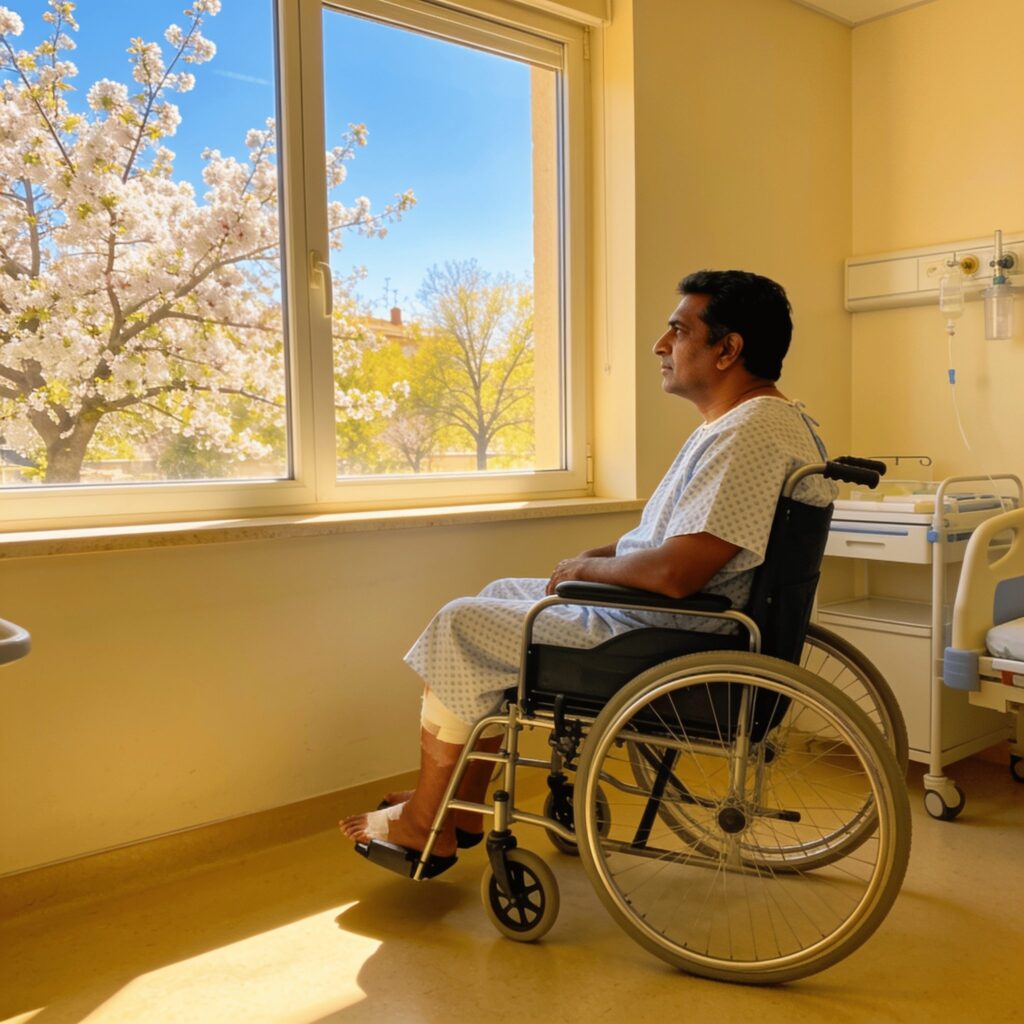
Recovery after knee replacement is gradual wherever you have it. In the first weeks the focus is on regaining movement and controlling swelling; most people rely on a walker or crutches at first and build up over six to twelve weeks. For a thorough overview of what recovery involves, the American Academy of Orthopaedic Surgeons’ OrthoInfo is a reliable, patient-friendly resource.
When can you fly? Most surgeons advise waiting about 10 to 14 days after surgery — longer for long-haul flights — until swelling is under control and you can bend the knee to roughly 90 degrees. Always get written clearance from your surgeon first, and check your airline’s policy.
Flying does carry one specific risk to plan for. Both surgery and long flights increase the chance of deep vein thrombosis (DVT), a blood clot in the leg. You can lower the risk by moving your ankles and walking the aisle regularly, staying well hydrated, wearing graduated compression stockings, and taking any prescribed blood-thinning medication exactly as directed. Seek urgent medical help for calf swelling and pain, chest pain, or breathlessness.
Finally, plan for continuity of care. Before you travel, arrange a local GP or physiotherapist who can check your wound and track your progress, and confirm how the overseas clinic provides remote follow-up. A small number of patients develop problems such as infection or stiffness weeks or months later, so it’s wise to know in advance who will manage that, whether your insurance covers complications or revision surgery, and what your options are at home. Thinking this through before you travel is a core part of doing medical tourism responsibly.
Frequently Asked Questions
How much does knee replacement surgery abroad cost?
All-inclusive packages typically run from about $4,500 to $13,000 depending on the country, compared with $30,000 to $50,000 in the United States. Remember to add flights, accommodation, insurance, and follow-up to work out your true total.
Which is the best country for knee replacement surgery?
There’s no single best country — it depends on your budget, how far you can comfortably travel, and the accreditation and surgeon experience on offer. India and Poland are among the most affordable, Mexico is popular with US patients for its short travel, and Turkey and Thailand are well-established hubs with JCI-accredited hospitals. Compare accreditation, surgeon volume, and total cost rather than price alone.
Is it safe to have a knee replacement abroad?
It can be, provided you choose an internationally accredited hospital and an experienced, high-volume surgeon. The surgical risks are broadly similar to having the operation at home, with the added factors of travel and follow-up to manage. Verify accreditation, read independent reviews, and confirm the clinic’s plan for complications before you commit.
How long do you have to stay abroad after knee replacement?
Most patients stay around 10 to 14 days — typically three to five nights in hospital, followed by hotel recovery and initial physiotherapy before they’re cleared to fly.
When can you fly after knee replacement surgery?
Usually 10 to 14 days after surgery, once swelling is controlled and you can bend the knee about 90 degrees, and only with your surgeon’s written clearance. Take clot-prevention precautions during the flight.
Does insurance cover knee replacement surgery abroad?
Public systems such as Medicare and the NHS generally don’t cover planned surgery overseas. Some private policies reimburse part of the cost if it’s pre-approved, and dedicated medical-travel insurance can cover complications. Always read the fine print, especially around pre-existing conditions and revision surgery, and consider a policy that specifically covers medical repatriation in case you need to be flown home for further care.
Ready to explore knee replacement in Turkey? Live Taller Now’s Istanbul team performs knee replacements in JCI-accredited hospitals with internationally trained surgeons and transparent, all-inclusive packages. See full costs, hospitals, and what’s included — and book your free consultation today.