
Most of your hip replacement recovery does not happen in the hospital — it happens at home, over the weeks and months after you walk back through your own front door. Knowing the realistic hip replacement recovery time, and the dos, don’ts and precautions that go with it, is what protects your new joint and keeps your progress on track. While every patient heals at a slightly different pace, the broad timeline and the rules for daily life are remarkably consistent. This guide walks you through the week-by-week recovery, how to prepare your home, the precautions that prevent problems, and the warning signs that mean you should call your surgeon.
How Long Is Hip Replacement Recovery?
There is no single answer to hip replacement recovery time, because it depends on your age, general health, the surgical approach used and how closely you follow your rehabilitation plan. That said, most people move through the same broad phases, and many are surprised by how quickly the early milestones come. Standing and taking a few assisted steps on the day of surgery or the day after is now routine, and most patients go home within one to two days.
The first couple of weeks centre on walking with a frame or crutches, managing swelling, caring for the wound and doing the gentle exercises your physiotherapist prescribes. Staples or sutures usually come out around ten to fourteen days. By three to six weeks, most people have swapped the walker for a single cane, regained much of their independence and, for desk-based jobs, often returned to work. Most posterior-approach precautions are eased somewhere between six and twelve weeks, by which point many patients are walking unaided. Full recovery — when strength, stamina and comfort have largely returned — typically arrives between three and six months, though small gains can continue for up to a year.
| Phase | Timeframe | What to expect |
|---|---|---|
| Surgery & hospital | Day 0–2 | Stand and take your first assisted steps; most patients go home within one to two days |
| Early recovery | Weeks 1–2 | Walking with a frame or crutches; wound care; staples or sutures out around 10–14 days |
| Building independence | Weeks 3–6 | Switching to a single cane; light daily activities; desk-based work often resumes |
| Precautions eased | Weeks 6–12 | Many patients walk unaided; most posterior precautions lifted; strength improving |
| Full recovery | 3–12 months | Stamina and strength continue to build toward your final result |
These timeframes are general ranges; your surgeon will give you a timeline based on your procedure and progress.
Setting Up Your Home Before Surgery
A little preparation before your operation makes the first weeks far easier and safer. Because you will be moving carefully and avoiding bending, the goal is to bring everything within easy reach and remove anything you could trip over.
Before you go in, clear loose rugs, trailing cables, and clutter from your main walking paths. Fit a raised toilet seat and, where possible, grab bars in the bathroom, and set up a sturdy shower chair. Buy a few inexpensive aids that save you from bending: a reacher or grabber, a long-handled shoehorn, a sock aid, and a long-handled sponge. Choose a firm chair with armrests rather than a low, soft sofa, and move everyday items — kettle, mugs, medications, chargers — up to waist or counter height. If you can, arrange a recovery space on a single level so you are not forced up and down stairs in the first days, and keep your phone, water and pain medication within arm’s reach.
Hip Replacement Precautions: The Big Don’ts
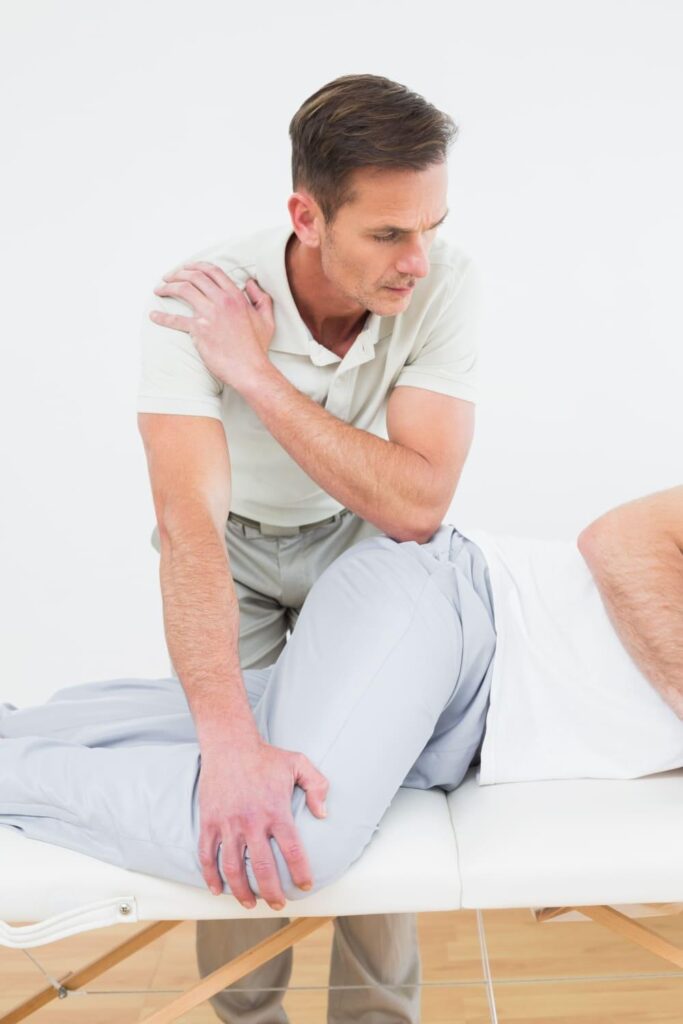
For the first weeks after surgery, your new hip is at its most vulnerable to dislocation while the surrounding muscles and soft tissues heal. Hip precautions are the simple rules that keep the joint stable during this window. If your surgery used the common posterior approach, three precautions matter most.
First is the ninety-degree rule: do not bend your hip so that the angle between your thigh and your torso becomes smaller than ninety degrees. In practice that means not leaning forward to reach your feet, not pulling your knee up high, and not sitting in low chairs. Second, do not cross your legs — at the knees or the ankles — and do not let the operated leg drift across the midline of your body. Third, do not rotate the operated leg inward; keep your toes pointing forward or slightly out rather than turning them in, and avoid pivoting or twisting on that leg. Many surgeons also ask you not to sleep on the operated side and to keep a pillow between your knees.
These restrictions are usually maintained for around six to twelve weeks, until your surgeon confirms the joint is stable. It is worth knowing that precautions are not identical for everyone: the anterior approach, which reaches the hip from the front, often carries fewer movement restrictions, and some surgeons now use tailored or “unrestricted” protocols. The precautions that apply to you depend on your surgery, so always follow the specific instructions your own surgical team gives you over any general advice.
Daily-Living Dos and Don’ts
Within those precautions, day-to-day life quickly becomes manageable with a few adjustments. The table below summarises the dos and don’ts for the activities patients ask about most.
| Activity | Do | Don’t |
|---|---|---|
| Sleeping | Sleep on your back with a pillow between your knees | Don’t sleep on the operated side until your surgeon clears it |
| Sitting | Use a high, firm chair with armrests | Don’t sit on low, soft sofas or lean forward past 90 degrees |
| Bathing | Use a shower chair and a long-handled sponge | Don’t climb into a bathtub until your surgeon allows it |
| Dressing | Use a reacher, sock aid and long shoehorn; dress the operated leg first | Don’t bend down to reach your feet |
| Stairs | Lead up with your good leg, down with the operated leg and crutch | Don’t tackle stairs without a handrail |
| Driving | Wait until you’re off opioid pain medication and cleared to drive | Don’t twist through the hip getting in and out of the car |
A few points are worth expanding. For sleeping after hip replacement, lie on your back with a pillow between your knees for the first several weeks; once your surgeon allows side-sleeping, keep the pillow there to stop your legs crossing the midline. When sitting, favour a high, firm chair and avoid staying in one position for more than half an hour or so early on. On stairs, the old reminder holds: lead with your good leg going up and your operated leg going down, with a hand on the rail. And do not drive until you are off opioid pain medication and your surgeon has confirmed you have the strength and reaction time to do so safely — commonly a few weeks, and longer for a right hip or a manual car.
Movement and Exercise That Speed Recovery
Gentle, consistent movement is the engine of a good recovery. Walking little and often is the single most important thing you can do: it builds strength, eases stiffness and helps prevent blood clots. Alongside walking, your physiotherapist will give you a set of simple exercises to do several times a day — typically ankle pumps and circles to keep the circulation moving, plus gentle muscle-tightening exercises for the thighs and buttocks, progressing to standing exercises as you grow stronger.
Just as important is knowing what to leave alone for now. Avoid high-impact activities such as running and jumping, deep squatting, and any twisting through the hip in the early weeks. As you recover, low-impact activities like walking, swimming and cycling are usually encouraged. The American Academy of Orthopaedic Surgeons offers detailed guidance on returning to activities after a hip replacement, but your surgeon and physiotherapist remain the best source for what is right for your stage.
Warning Signs: When to Call Your Surgeon
Most recoveries are smooth, but a few symptoms need prompt attention. Contact your surgeon if you notice signs of infection around the incision: spreading redness, increasing warmth or swelling, fluid or pus draining from the wound, a foul smell, or a fever. Be alert, too, for signs of a blood clot in the leg, known as a deep vein thrombosis — new pain, tenderness, swelling or warmth, usually in the calf.
Some symptoms are emergencies. Sudden shortness of breath or chest pain can signal a clot that has travelled to the lungs and needs immediate emergency care. And if you feel sudden, severe pain in the hip or groin, cannot bear weight, or notice that the leg looks shorter or turned out of position, the joint may have dislocated — seek urgent medical help. When in doubt, it is always safer to call.
Recovering After Hip Replacement Abroad
If you are having your hip replacement overseas, the recovery principles are the same — but the logistics need a little extra planning. The biggest consideration is flying. Sitting still for hours raises the risk of a blood clot, so most surgeons advise waiting until you are cleared to travel and taking precautions in the air: move and do ankle pumps regularly, stay well hydrated, wear compression stockings, and follow any blood-thinning medication your surgeon prescribes. An aisle seat makes it easier to get up and walk.
Plan your follow-up care before you travel home, including who will provide physiotherapy and how any concerns will be reviewed from a distance. It also pays to choose your provider carefully: our guide to hip replacement surgery in Turkey explains what to look for in an accredited hospital and an experienced surgeon, and how aftercare is arranged for international patients.
Frequently Asked Questions
How long does it take to fully recover from a hip replacement?
Most people feel largely recovered — with strength, stamina and comfort restored — within three to six months, though minor improvements can continue for up to a year. Early milestones come much sooner: walking with aids within days and switching to a cane within a few weeks.
What are the three big don’ts after hip replacement?
For the common posterior approach, the three main don’ts are: do not bend your hip past ninety degrees, do not cross your legs or bring the operated leg across your body’s midline, and do not rotate the operated leg inward. Together they protect the joint from dislocation while it heals.
What is the 90-degree rule after hip replacement?
The ninety-degree rule means keeping the angle between your thigh and your torso greater than ninety degrees — so you avoid bending too far forward, pulling your knee up high or sitting in low seats. It is one of the key posterior precautions in the early weeks.
How long does it take to walk normally after hip replacement?
Many patients walk with a frame or crutches immediately, move to a cane within three to six weeks, and walk unaided once precautions are eased around six to twelve weeks. A natural, confident gait often returns within a few months as strength rebuilds.
How should I sleep after a hip replacement?
Sleep on your back with a pillow between your knees for the first several weeks, which keeps the leg from crossing the midline. Avoid sleeping on the operated side until your surgeon says it is safe, usually after about six weeks.
When can I fly after a hip replacement?
Timing varies, so follow your surgeon’s advice, but many allow short flights after a week or two and longer flights a little later, given the clot risk of sitting still. On any flight, move regularly, stay hydrated and wear compression stockings.
Recovering Well at Home
A successful hip replacement is as much about the weeks at home as the operation itself. Understanding your recovery timeline keeps your expectations realistic, while following your hip precautions and the everyday dos and don’ts protects your new joint while it heals. Prepare your home, keep moving within your limits, and lean on your surgeon and physiotherapist whenever you are unsure.
Planning your procedure? See how surgery and aftercare are arranged for international patients.